A jewelry laser welder typically costs several thousand dollars for an entry-level desktop machine, while professional systems can cost $10,000–$25,000 or more. Premium workstations may exceed $40,000, depending on the laser technology, configuration, and the jewelry laser welder supplier you choose.
But the purchase price is only part of the investment.
Jewelry repair shops and goldsmiths also need to consider maintenance, electricity, shielding gas, replacement parts, training, and potential downtime.
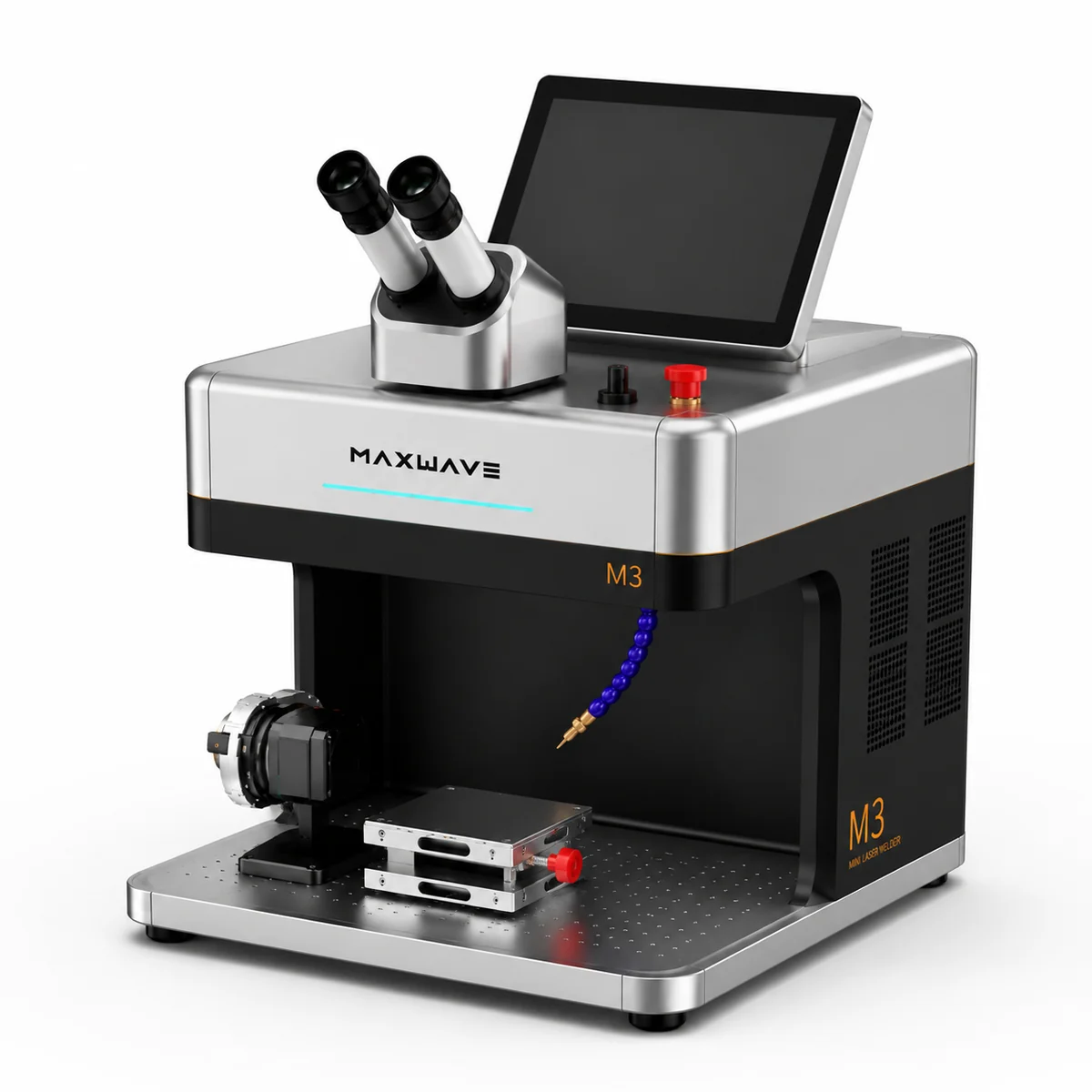
For workshops offering multiple services, a multifunction system may provide additional value. For example, the M3 Jewelry Laser Welder combines welding, marking, and cutting in a compact workstation, allowing suitable businesses to handle more than one type of jewelry work with a single machine.
So how much should you actually budget, and which configuration makes financial sense?
This guide explains jewelry laser welder prices, ownership costs, and payback calculations while helping you compare traditional welding equipment with multifunction options such as the M3 jewelry laser welder.
1. How Much Does a Jewelry Laser Welder Cost in 2026?
Jewelry laser welding machine prices vary widely because different systems are designed for different workloads.
A compact desktop machine may be sufficient for basic jewelry repairs, while a professional repair center may require greater pulse control, consistent cooling, and more extensive support.
Jewelry Laser Welder Price Ranges
Machine Category | Indicative Price | Best For |
|---|---|---|
Entry-Level Desktop Welder | $2,500–$7,000 | Small repair shops and occasional welding |
Professional Jewelry Laser Welder | $9,500–$25,000 | Daily jewelry repair and goldsmith work |
Premium Laser Workstation | $25,000–$46,000+ | High-volume operations and specialized applications |
M3 Multifunction Jewelry Laser Welder | Request current quotation | Small studios needing welding, marking, and cutting |
These are indicative price categories based on publicly available market listings, not guaranteed prices for every machine. The M3 price depends on the selected configuration, accessories, and delivery terms.
An entry-level machine may provide the basic pulse controls and viewing equipment needed for small repairs.
Professional systems may add more advanced optics, improved operating ergonomics, extended parameter control, and stronger technical support.
However, the most expensive machine is not necessarily the best choice for a small workshop.
The decision should depend on the repair types you handle, how frequently you use the equipment, and whether you need additional functions.
Where Does the M3 Jewelry Laser Welder Fit?
The M3 is designed for businesses that want more than a dedicated welding workstation.
Its main advantage is combining three applications in one compact system:
Welding: Repairing selected rings, chains, prongs, and small metal defects.
Marking: Adding logos, names, and other personalized details.
Cutting: Producing suitable small custom jewelry shapes from thin metal.
This makes the M3 particularly relevant for independent goldsmiths, small jewelry studios, and businesses expanding into personalized jewelry production. For background, see how a laser welder supplier for repair shops and studios positions it.
For example, a studio may repair a gold ring, add an engraved design, and produce a small personalized pendant without investing in three separate full-size machines.
Actual marking and cutting capabilities depend on the material, thickness, and selected equipment configuration.
If your shop only performs occasional welding, a dedicated entry-level machine may still be the more economical choice.
But if you regularly handle welding and personalization work, a multifunction jewelry laser welding machine deserves consideration.
2. What Features Affect Jewelry Laser Welder Prices?
Two jewelry laser welders with similar advertised power ratings can have substantially different prices.
This is because power alone does not determine welding capability.
Pulse characteristics, viewing systems, cooling, machine construction, and additional functions all affect the equipment's value.
Laser Technology and Pulse Performance
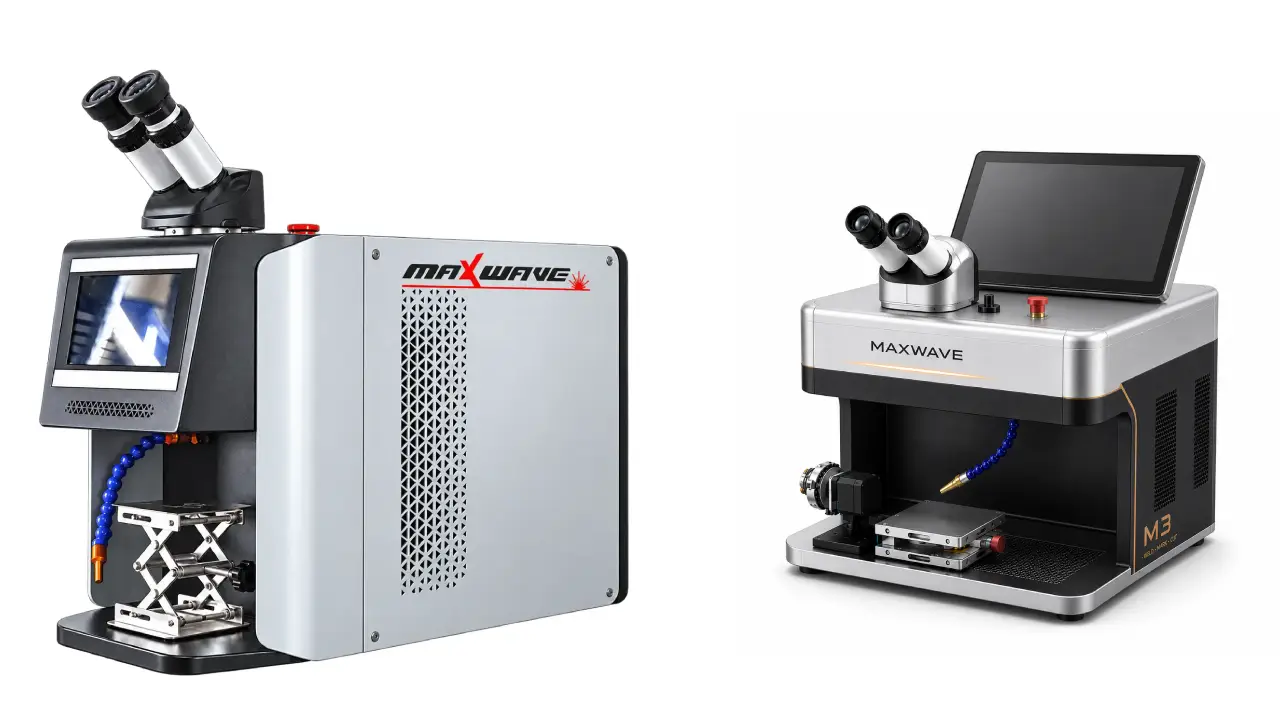
Traditional pulsed Nd laser welders have been used in jewelry repair for many years.
These machines commonly use focused laser pulses to join gold, silver, platinum, and other suitable alloys.
Some conventional systems use flashlamp-pumped sources and water cooling.
QCW fiber laser systems provide another approach, with different source designs and maintenance characteristics.
For both technologies, the most important specifications include pulse energy, pulse width, spot diameter, pulse frequency, and the stability of the welding process.
For example, rebuilding a fine gold prong requires different energy delivery from repairing a thicker ring section.
A machine with precise adjustment and stable output may be more useful than a higher-powered system with limited practical control.
Cooling and Maintenance Requirements
Cooling design is another important purchasing consideration.
Water-cooled systems require attention to coolant condition, pumps, filters, and related components.
Air-cooled systems eliminate routine water-cooling maintenance but still need adequate airflow, clean vents, and suitable operating conditions.
The M3 uses an air-cooled configuration, which can be attractive for small workshops seeking a compact setup.
Published M3 configuration information lists the following characteristics:
M3 Feature | Published Configuration |
|---|---|
Functions | Welding, Marking, Cutting |
Cooling | Air Cooling |
Machine Dimensions | Approximately 300 × 340 × 320 mm |
Machine Weight | Approximately 25 kg |
Intended Users | Jewelry repair shops and custom jewelry studios |
Specifications from the jewelry laser welder vendor should be confirmed against the exact M3 configuration offered at quotation.
Its compact dimensions may help businesses with limited bench space avoid allocating separate areas for multiple larger workstations.
However, the actual investment benefit depends on which functions the workshop will use regularly.
Viewing Systems and Included Accessories
Jewelry welding requires accurate positioning because repair areas can be extremely small.
Depending on the model, machines may provide microscope viewing, camera observation, adjustable targeting, or additional positioning functions.
Before comparing prices, confirm whether the quotation includes the essential viewing system and operational accessories.
Also ask about software, training materials, protective components, and replacement-part availability.
For multifunction equipment, request demonstrations of all the functions you intend to use.
Do not assume that a welding demonstration proves the system can also mark or cut your chosen jewelry materials to the required quality.
3. What Are the Long-Term Jewelry Laser Welder Ownership Costs?
A low purchase price does not always result in a lower total ownership cost.
Maintenance, operating expenses, and machine reliability can become significant over several years.
The correct comparison should include the full cost of making the equipment operational and maintaining it.
Initial Costs Beyond the Machine
Expense | What to Confirm |
|---|---|
Shipping and Delivery | Freight, taxes, customs duties |
Electrical Requirements | Voltage, power supply, installation |
Shielding Gas | Cylinder and regulator, where needed |
Safety Equipment | Appropriate laser protection and fume extraction |
Training | Operating guidance and application training |
Initial Accessories | Included fixtures, controls, and maintenance supplies |
Some laser welder suppliers include certain items, like training and support, in their standard packages, while others charge separately.
Request an itemized quotation showing the total delivered cost.
Routine Operating and Maintenance Expenses
Different laser technologies have different maintenance requirements.
Expense | What Affects the Cost |
|---|---|
Protective Optics | Cleaning and replacement frequency |
Flashlamp Replacement | Applies to lamp-pumped systems |
Cooling Maintenance | Water cooling or air-cooling system |
Shielding Gas | Material and welding requirements |
Electricity | Operating hours and actual power consumption |
Replacement Parts | Component prices and supplier availability |
Technical Service | Warranty coverage and repair arrangements |
For the M3, the air-cooled design avoids routine coolant replacement and servicing of a water-cooling circuit.
However, this does not mean the machine is maintenance-free.
Optical components, ventilation, controls, and any application-specific accessories still require appropriate inspection and care.
Because the M3 also supports marking and cutting, businesses should ask whether those operations require additional protective components, fixtures, or consumables.
Three-Year and Five-Year Cost Example
Consider a hypothetical jewelry studio purchasing a multifunction laser workstation.
Assume a $10,000 equipment price, $1,500 in additional setup costs, and an average annual maintenance and operating allowance of $700.
Cost Item | 3 Years | 5 Years |
|---|---|---|
Equipment Purchase | $10,000 | $10,000 |
Initial Setup | $1,500 | $1,500 |
Operating and Maintenance Allowance | $2,100 | $3,500 |
Illustrative Ownership Cost | $13,600 | $15,000 |
These are hypothetical budgeting assumptions, not a confirmed M3 price or an expected maintenance cost. Taxes, financing, major failures, labor, and resale value are excluded unless already included in the assumptions.
This example demonstrates why the initial purchase price and long-term maintenance should be evaluated together.
For a multifunction machine, also compare its total ownership cost with the cost of purchasing and maintaining separate equipment for the same services.
A combined system may simplify equipment ownership, but the financial advantage depends on its actual capabilities, throughput, and service requirements.
4. Is a Jewelry Laser Welder Worth the Investment?
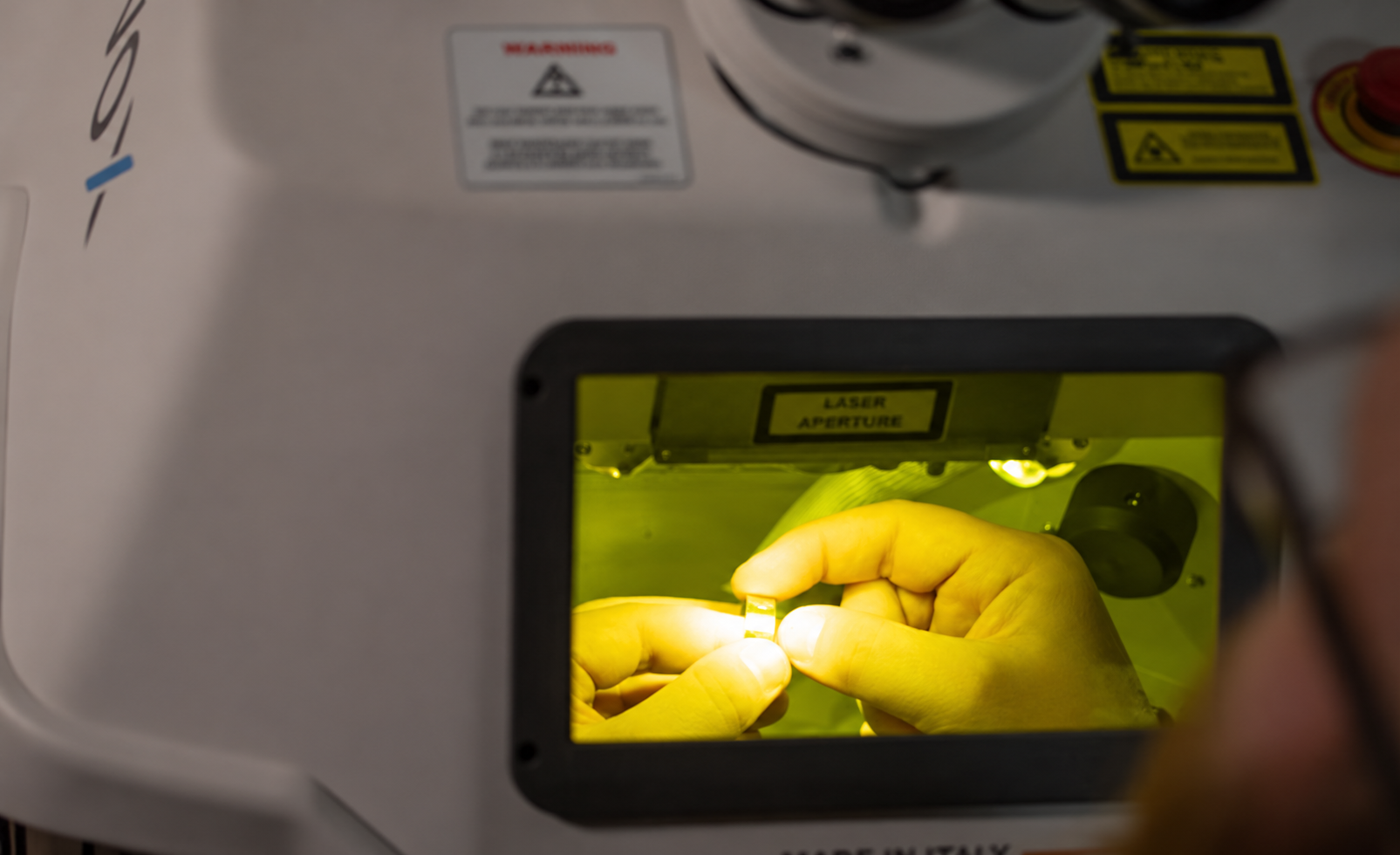
For a jewelry repair business, the financial value of a laser welder from a jewelry repair equipment supplier depends on how it changes the work your shop can perform.
The machine may help bring previously outsourced repairs in-house, reduce some handling or finishing steps, or allow you to accept jobs that were previously difficult to complete.
However, revenue from existing repairs should not automatically be counted as new income created by the machine.
Calculate Payback from Additional Contribution
A useful payback formula is:
Payback Period = Total Installed Investment ÷ Additional Monthly Contribution
Additional contribution means the financial benefit after accounting for the extra costs required to perform the work.
Suppose a shop invests $10,000 in laser equipment and earns an additional $25 per qualifying repair compared with its previous workflow.
Additional Repairs per Month | Monthly Contribution | Simplified Payback |
|---|---|---|
20 | $500 | 20 months |
40 | $1,000 | 10 months |
60 | $1,500 | 6.7 months |
These figures are illustrative, not expected repair volumes or guaranteed returns.
Before buying, review the actual repair volume your shop handles each month.
Pay particular attention to prong repairs, fine chain repairs, casting defects, and jobs that currently require outside welding services.
These are the applications where bringing laser welding in-house may create measurable value.
Can the M3 Generate Value Beyond Jewelry Repairs?
A multifunction system introduces another consideration.
The M3 combines jewelry welding with marking and cutting capabilities, which may allow a workshop to provide additional customization services.
For example, suitable projects may include personalized jewelry names, small decorative metal shapes, or engraved logos.
A business already receiving requests for these services may be able to handle more work in-house.
However, these opportunities should be evaluated separately.
Ask whether customers are already requesting the service, how often the machine would be used, and how much contribution each additional order could produce.
For a repair shop considering a 3-in-1 jewelry laser welder, the investment may be easier to justify when welding, marking, and cutting all contribute to actual business demand. It also helps to compare an all-in-one laser welder supplier against a separate welder, marker and cutter.
If marking and cutting are rarely needed, the additional functions may provide little immediate financial benefit.
A multifunction machine creates value through the services you actually sell, not simply through the number of functions it offers.

5. How to Choose the Right Jewelry Laser Welder for Your Business
The best jewelry laser welder should match your repair workload, available workspace, and future business plans.
A small repair counter may prioritize compact dimensions and straightforward operation.
A busy repair center may place greater importance on repeatable welding performance and service support.
A custom jewelry studio may benefit from a machine that combines multiple laser processes.
When Should You Consider the M3?
The M3 Jewelry Laser Welder is especially worth evaluating when your workshop has limited space or intends to offer both repair and customization services.
Its compact benchtop configuration and air-cooled design may simplify installation compared with larger equipment that requires separate cooling arrangements.
Its welding, marking, and cutting functions may also reduce the need for multiple dedicated machines, provided their capabilities meet your actual production requirements.
However, a workshop focused exclusively on high-volume welding should compare the M3 against dedicated professional welding systems before deciding.
Neither machine type is automatically better for every business.
What to Confirm Before Purchasing
Before requesting a final quote, compare the following:
Buying Factor | What to Verify |
|---|---|
Welding Applications | Materials, thicknesses, repairs, sample results |
Additional Functions | Marking and cutting materials and capabilities |
Machine Configuration | Exact accessories, controls, and specifications |
Delivered Cost | Equipment, freight, taxes, and setup |
Operating Costs | Maintenance parts, utilities, consumables |
Training | Setup guidance and application-specific instructions |
Warranty | Included coverage and exclusions |
Spare Parts | Availability and replacement pricing |
For a multifunction machine, request separate samples demonstrating welding, marking, and cutting.
For jewelry repair, use representative gold, silver, or platinum components rather than relying only on promotional images.
If your business handles stone-set pieces, inspect the gemstones and repair location carefully. Focused laser energy can reduce heat spread, but it does not guarantee safety for every mounted stone. To see how it compares with soldering for repairs, read this guide from a jewelry laser welding equipment supplier.
Laser welding, marking, and cutting also require appropriate laser safety controls, protective equipment, operator training, and fume extraction.
Compare the Complete Investment
Before purchasing a jewelry repair laser welder, calculate the total cost of ownership and identify which services will generate enough work to support the investment.
For a welding-only repair shop, a dedicated laser welder may be the most economical option.
For a small jewelry studio offering repairs, personalized marking, and custom metal shapes, the M3's multifunction design may provide greater flexibility.
The final decision should be based on actual samples, equipment specifications, pricing, and realistic workload expectations.
Conclusion
A jewelry laser welder can cost from several thousand dollars to tens of thousands, but the purchase price alone does not determine whether it is a good investment.
The real cost includes equipment configuration, installation, consumables, routine maintenance, and technical support.
For repair shops, a laser welder may be worth buying when it reduces outsourcing, improves suitable repair workflows, or allows additional profitable work.
For custom jewelry businesses, multifunction systems such as the M3 may provide additional opportunities by combining welding, marking, and cutting in a compact workstation.
However, the financial value depends on which services your customers actually need.
Before investing, compare the complete equipment price, long-term ownership costs, and real sample results.
Interested in the M3 Jewelry Laser Welder for your workshop? Contact M3Welder to discuss your jewelry repair, marking, and cutting requirements. Request the current machine configuration, a detailed quotation, and application-specific demonstrations to determine whether the M3 fits your business and budget.